Auschwitz-Birkenau

Arbeit Macht Frei

You aren’t going to describe your experience at Auschwitz?

Why should I try? I don’t have the right words or emotions to attempt to describe the atrocities of this genocide, let alone the authority to.

Still, don’t you think that you, as a writer, should at least attempt to use words to convey the emotions that you personally experience during your visit?

It was claustrophobic, it was haunting, it was agitating, and it was too immense to mentally grasp in any one thought. Is that good enough?

I suppose. But why not try to use some more dramatic language?

Because this location is not about me. It’s not about how serious-sounding words I can come up with to describe my three hour visit to this death camp. Human lives were dragged here. Human lives were destroyed here. They deserve more than dramatic, flowery language. At the end of the day, human life is simple: we are alive, we feel and think; hurt and love. That’s the simple truth of it.

If it was really that indescribable… perhaps you can describe how can we prevent it from happening again?

Can we? I mean, can we really? In order to do that we need to be vigilant. We need to be on guard, not just as an individual, nor a country: but as a world. The price of liberty is constant vigilance (working) against those who would rob it from us. To use the Nazi phrase in bitter irony… Arbeit Macht Frei.

Work Sets You Free

Czech’ns No. 4 & 5

The name of the game for these two weeks has been DISSENT. Having covered Art & Nation, and Art & Ideology, we now moved to Art & Dissent, within the confines of a totalitarian communist state. This is perhaps the lessons that have appeared most similar to some of my lessons in German history and culture, because East Germany was also trapped under the obscurity of The Iron Curtain. This fact puts Germany into a very interesting place culturally and historically today, because it’s strong identity as part of Western Civilization culturally. BUT… that is a discussion for another day.

The thing that has surprised me most of all since coming to Poland and learning briefly about their fall to communism, is the radically different approach to submitting to communism. In the Czech Republic (Czechoslovakia at the time – that is an important distinction), the approach was submissive in appearance, and leaving the dissidence to the intellectuals and the artists. There is an overwhelming amount of material about artists who were banned by the government – some who grew depressed over that fact, some who took pride it in, and some who were determined to conform to the law, in order to keep being creative. We also learned that common in both Czechoslovakia and Poland, there was a difference between the communism of the 1950s and the communism of the ‘70s and ‘80s. But it was reversed (I say that loosely, rather, they were perceived differently) to each other. The communism of the 50s in Poland was positive, and life was cheerier, whereas Czechoslovakia was under communism’s iron clad grip and fear. The ‘60s were a period of growing progressiveness in Czechoslovakia until Stalin invaded Prague, and August 1968, he crushed the growing agitation. Then life became dreary, and bleak, and grey… but not quite as oppressive.

Grey is an important theme, which draws me back to our classes. In history, the discussion focused on the grey zone – the area in which people neither dissented nor forwarded The Party’s message (meaning, the communist party). They merely survived, and then reaped the reward in the fall of communism in ’89, by being the best well off in the new political momentum.

Our theater history session was with historian Ripka and our theater lecturer Dr. Barbara Day. We got to learn a lot about her personal involvement with the underground universities taking place in Czechoslovakia in the 70s and 80s, in which professors from the Western world would come on a traveler’s visa and teach a few lectures over the course of a weekend. Being able to talk to someone directly involved was unreal.

In literature we talked about the cultural reality of the present day, as affected by the communistic era. One piece that I really liked was The Tragedy of Central Europe by essayist Kundera, a famous Czech writer. In this discussion, we talked a lot about world literature (having read another piece titled Die Weltliterature) and whether or not it can exist. We were very divided, even when discussing examples such as Shakespeare, the Canterbury Tales and so on and so forth. But this other reading considered the reality and struggle of Central Europe being recognized. Poland, and certainly the Czech Republic (again, formerly Czechoslovakia) has felt a cultural tug towards the west, but a heavy and oftentimes oppressive tug politically towards the East. As a result, it at times has felt like an area that has fallen into disregard and abandonment, and not taken seriously enough as a region or set of countries. And besides, how does Central Europe even become defined? By political borders? How, when bigger countries on either side of Poland keep changing its borders for itself?

And that’s the basic idea to what we have learned about these past two weeks. This week we are in Krakow, Poland; Cíerny Balóg, Slovakia; and Žilina, Slovakia. Next weekend, I will be in Munich, Germany. Then it’ll be back into the classroom, the last two weeks before final exams. Yelp.

Until Next Time,

Joe

Hauntings, Cultural Curiosities, and Family

In order to cover my Czech Republic Regional Stay in an efficient and satisfactory method, I will not be doing a day-by-day recount of what happened. Check out the Regional Stay Assignment when I post it, if you want to see the journal entries for a couple of the days. Instead, I will be covering the excursion by topics that were relevant and significant to the excursion. My topics discussed will include Family, Hauntings, Art, NGOs, Cultural Curiosities.


On Family

In the personal home we stayed in, family was a strong aspect of life for the week. We were hosted by the grandmother Mirka, who used to be the Mayor of the village Olbramov, and over the weekend, we were guided by her daughter Lucka and son-in-law Markus. They were not at all what I was expecting. Just having spent a week learning about the flip-flop expulsions of first Czech and then Germans from this region, the last family I expected to meet was a mixed marriage of Czechs-Germans. I will refrain from going into personal details, out of respect for this family (who are people, not subjects) but it led to some very interesting conversations. Then Sunday – Tuesday, we met and were guided by their son (Mirka’s grandson) Krystof. In this time, we got to meet Lucka’s other three sisters, as well as her youngest son. We went on an arts tour with her on Tuesday, since she had been an art “major”.  Throughout all of this, Sunday night was the craziest, because the whole ensemble was there. The interesting thing was, we got the sense that it was not that uncommon of an event. Certainly no time was spent preparing the house to look extra nice, like what would happen in the US.

On Hauntings

Hauntings pervaded much of this trip, because we were really living in an area (the former Sudetenland) that had suffered some terrible history between the Czechs and the Germans. As a German speaker, I was lucky to have been placed in a family that not only encouraged learning about the history, but in a real sense of the word, lived it (lives, I should say). Multiple times we saw German graveyards, and these get me every time. The state of the tombstones is shocking in some cases, some… in fact, completely nameless and simply tossed into the corner. That once represented someone’s life, and now, not even an identity is attached to them. The same could be said for the abandoned villages. There are countless of them in the Czech countryside, but the one we saw consisted of a stone pillar next to a wooden swing, and a small pile of mossy stones just off to the side. That is all that remains of the village center.

Perhaps what is most remarkable about these experiences however, is if you go and simply contemplate in silence. You get a powerful sense of the history that is speaking to you, and you also get an unspoken sense of what has been lost here: the memory, and sometimes even the lives; you look at a pile of mossy stones, and you realize that there is where someone used to return to every night, somewhere they used to call home. Then you back up and realize that the memory of a whole generation of Germans living in the borderlands got completely obliterated, in a surge of resentment, anger, and sometimes even outright hatred.

On Art

Art was also a fairly common one here. It started with our first night, which we went to go see a Pecha Kucha performance. Pecha Kucha is a “performance”/presentation style, where you present 20 slides in 20 seconds each for a total of 6:40 long presentations. There were some really interesting ones: an artist who uses wet cement to create paintings of everyday items or scenes (e.g. looking down a city highway) and one about creating city wide hammocks all over the country/continent, that homeless people could use by night, and could be used for recreation by day, as just a couple examples. Another cool art exhibit was this modern artist that was clearly using technology for his paintings, and they were super simple. It’s hard to describe, but the paintings consisted of basic shapes: blocks, circles, lines, in order to paint some sort of domestic or nature picture (a harvest field, or a bowl of spaghetti, for example). Then of course, there was the big art tour on Tuesday morning. Here we saw a lot of restoration efforts of these historical sites, and some of them were absolutely mind-blowing how much work had been done, and how successful they were. We also learned a lot about art history when we went to the cathedral as well. A memorable statue was the one we visited in the middle of the woods. No back story to that. It was just found there. Randomly.

On NGOs

Non-Governmental Organizations. We learned about two of them, Monday morning. We learned about one that funds money to towns and villages that apply for this funding, and can prove a real need with important projects. We learned about another the funds children’s art programs. If they have a project idea, they can apply and get a considerable amount of money (for young children’s programs, which the idea is often created or at least shaped by the kids). Both of these were quite interesting: the first had more to do with efforts to help preserve these villages, and maintain both their present use, and their historical significance. The second was motivated in attempting to create a home culture for these kids, so they will recognize the village as their home, as somewhere they want to be, and hopefully somewhere to stay and live their lives, rather than heading off to a bigger city (such as Brno or Prague).

On Cultural Curiosities

Now, I could write a whole ton on this. Probably literally. At the very least, I could right 15 weeks’ worth… (from August 30 – December 13, 2014). But in the context of this visit, I came up with the term because we had several notably lengthy conversations with Krystof (and even some with his dad, Markus) about the American culture vs. Czech/Prague culture vs. Czech/countryside. One of the biggest discussions we had was regarding the American workaholic culture, and how that really defines every single other aspect of an American life. Where you live, who you fall in love with, how much money/what kind of living you have… they’re all based on this idea of you go and find work, and everything else will follow. Notably different than the less competitive Czech spirit, and even more different than the laid back life of the Czech countryside. The other reason I came up with this phrase is because it relates back to the beginning and the discussion of family. Living with this mixed Czech-German family could not have been a better inspiration for me in regards to my ISP and regards to my future plans regarding German. It’s a curiosity because of the region’s history, but perhaps most of all, to me it’s a cultural curiosity because it has so much to offer to the future in terms of healing, learning and growing. As a culture, for which direction that will take you, there could be no greater curiosity.

Czech’n No. 3

Well, what can I say? We are more or less half-way done with the “intensive” part of the semester (aka academic classes). We’ve been here for a month as of this weekend, and have already completed our first of two major semester excursions. We have wrapped up our unit on Art & Nation, and we now move to Art & Dissidence, through the lens of literature, theater, film, politics and history. With our arts study essay and field journaling assignment behind us, and our interview assignment now on hand, we are in the thick of practicing and living the SIT academic student life combining theory with practice. That’s a brief summary of where we have been and where we are going.

I will jump a bit out of chronological order here. First I want to discuss week 3, very briefly. There was a lot of reading involved this week, which is making the upcoming week seem like a windfall with virtually no reading, which is nice. We read Hrabel’s Too Loud a Solitude, which is a very unusual book, in the sense that it is told stream of consciousness style, and is character driven rather than plot driven, though it does have an incredibly surprising and dark ending to it. As we learned in class from our professor, this book was written by the author during his depressive years. He had enjoyed great popularity initially, and then was censored by the Communist Regime, and agreed to renounce his old works so that he may publish again, which the public did not like (leading, even, to burnings of his books) and upon learning this, fell into depression, and in that time wrote this book. The book follows the thoughts of a book compacter, and it definitely has some political undertones to it.

The second book I had to read for this week was Animal Farm by George Orwell. It was surprisingly the first time I had ever read the book, because I was not in one of the teams that read it 8th grade, and I never did in high school either. I found the book very enjoyable, but was very disappointed at the end. I kept waiting for someone to overthrow Napoleon, for those of you who have read the book. As a whole, however, I found it a fun and quick read, and the purpose for us reading it was to learn about the 4 steps that are required to take over a country with communistic tendencies. It was very interesting to then go into actual history and closely examine how the two (story and history) reflected the 4 steps.

If that book was quick and fun, this final book was the counter-balance to it. For our creative writing workshop, we read the book Money From Hitler, by Radka Denemarkova. This book covers the story of one Ms. Gita Lauschmannova. She was a jewish Czech, identified as a Jew by the Germans and as a German by the Czechs, and therefore got kicked brutally (physically) back and forth by the two countries, surviving a concentration camp only to be beaten to an inch of death by the Czechs for coming back to Czech lands as a German. Upon asking our history professor whether this was a realistic situation, his response was he would say so. What also made the book even more difficult however, was the choppy thought-process of the main character at times, and the frequent jumping from her point of view to an outside point of view. At times it made the reading quite unbearable, and parts had to be skipped over in order to read the entire book by class.

The cool part with this final book however, was that we got to meet the author. And we got to ask her why she made the book so difficult to read, and what her intent had been. She responded saying that she wanted to push the reader out of their comfort zone, so that the reading matched the content.

Ok, so that was my brief summary of the week (:P). So now I’m going to jump out of order again, and talk about our recent stay in Český Krumlov, leaving the regional stay discussion for my next post.

Český Krumlov was a brief but enjoyable visit. First of all, I was surprised at how touristy Český Krumlov was. So many Asian tourists were there and even a noticeable number of American tourists. Too many shops were not Czech authentic, which made shopping undesirable other than a few postcards. The first day we simply arrived, had dinner and walked around. The second day, we had a couple tours. The first was of the town, and just getting to see some of the old buildings. We got to see a church, where our guide got into a bit of a fight with a really obnoxious tour guide totally disrespecting the people trying to simultaneously pray in the church. After that we had lunch at a vegetarian restaurant, where I had a very sweet chili. It was interesting, but not on my top 5 places. Then we had our second tour, where we got to see parts of the castle and listen to ghost stories, and hear about different historical racial accounts for Europe vs. the US.

It was after this second tour that we had a chance just to explore and walk around. We started with the castle gardens which were quite beautiful. Then we walked around and looked at all the shops, and it was here that we realized that most of the shops were tourist shops and not actually authentically Czech. Oh well. That night I went to dinner on my own, but unintentionally ended up joining two others at this Italian restaurant that had been recommended to us when we arrived. After dinner was the evening of pool games. I have lost count the number of games I played last night and this morning, but it was a lot. I lost a few and won several, all the while we all laughed at how poorly we were actually playing. At one point in the evening, I went for an evening walk and took a couple interesting night photos of the city.

Finally today we left to go back to Prague. In the morning, we had a meeting to discuss where we’ve been this past month, and where we’re going for the next one. We played several more games of pool, and then finally went out to go see this market/fair that was being set up for Wenceslaus Day, which is a national holiday taking place this weekend. It reminded me a lot of the Chicago Christkindlmarkt that we went to every year for German classes. I got a couple things here, before we left finally for Prague.

And that concludes my third Czech’n. A whirl of two weeks, and keep an eye out for my post regarding the Czech Republic regional stay!

Until Next Time,

Joe

Czech’n No. 2

…und Guten Tag aus Dresden, Deutschland!

First I must apologize for not posting the next day as I had promised, but I needed to prepare longer than I originally thought for the upcoming weekend. As a result, rather than have two separate posts for Week 2 and Germany, I will discuss both in this post.

It is the end of my second week in Prague, and my mind is a whirl-wind of thoughts and emotions. The week started out with what could be called our first real day of classes, opening with literature, and it closed with what could potentially have been a significantly life-changing weekend.

We had what I would consider our first normal academic week of the semester, and I refrain from saying normal week, because we only have six of these academic weeks over the entire semester. ONLY SIX. Which means, we now have FIVE left. (The math works out though, because with two weeks of excursions, four weeks for the ISP, one week for orientation, one week for finals and one week for debriefing an academic experience abroad, that gives you a fifteen week semester right there.)

This week’s theme was Art  and Nation, which was evident through the discussions we had, particularly in my Theater History course. We talked a lot about how the Prague National Theater has been a huge part of national identity for the Czechs since before it was even built, and the rest of our discussions were surrounding specific literature (Kafka’s Amerika, for example) and history (Germans/Czechs of the North Sudetenlands, where we were for part of this weekend).

We had two evening performances this week, both of which I missed unfortunately, one because I did not feel very good (and was also ill-prepared for a rainy commute home that day) and the other because I did not leave enough time to commute from home.

On Wednesday we had our first real Creative Writing workshop, which for me personally was very insightful, and I’ve already been applying it to my outside work, which is interesting. With a group of 4 people for a workshop, we each get about a half-hour of feedback, which is really, really nice, because it means we can go into a lot of detail. What makes me even happier is that our homework this week is to re-draft the stories that we wrote, so that means we’ll get two weeks of specific/detailed feedback on these pieces, the kind of attention that even Redlands Creative Writing workshops can’t give you. I’m less thrilled with the apparent feedback we got about not asking the visiting writer enough questions, because he spoke for an hour straight without taking a breath, giving us a very limited time to ask questions. (And when we would, he spoke for another ten minutes). Given that feedback, it made me realize how unfair double-standards are. She gives the writers certain expectations of the encounters, and then gives them free-reign since they’re her friends, and then holds us to standards that are incredible unfair and impossible, because she can’t be bothered to put some limitations on her friends. Sorry for the bitterness, but I will be extremely sore if that’s the kind of unprofessional attitude that’s going to determine one of my creative writing grades back at Redlands. I suppose it’s good to know that not everything about being in a different continent for 3.5 months will be entirely fantastical and positive and amazing, but there’s a bit of reality here too.

Anyway, on Thursday we had our first film session. We watched the Slovak movie Shop on Main Street, which is an incredibly dark but beautiful movie about the Holocaust from the Czech/Slovak point of view, which was a little bit different than the usual German-holocaust film, but in many ways also similar (of course). The basic story follows this poor man (and his wife) are struggling to make ends meet until the man’s brother-in-law (the Nazi leader for this town) makes the man the Aryan controller of a Jewish shop that this frail Jewish lady who is almost deaf (supposedly). The story then follows their interactions as the Germans descend upon the town and order all the Jews over to camps. I will leave you to watch it to see how it ends, but it’s a very moving story of an unexpected friendship.

This movie then prepared us for our weekend excursion. We left the very next morning to the North Sudetenland for the first part of the day. This was a very unsettling experience in a number of ways. Because of the struggles between the Czechs wanting their own nation and the Germans living in this area wanting to be part of the Third Reich, ultimately the Germans were cast out as the Czechs finally achieved their own nation and the Germans lost the second world war. As a result, German people and families and whole villages were uprooted and kicked out of the Sudetenland. You can see the results physically with some villages being simply ruins and old buildings (and some have returned completely to wilderness, no signs of any old buildings even) and in others where people still live, you can culturally see that the same sense of home and community never returned. Perhaps the most moving part of the Sudetenland excursion was the last part, when we stopped at a cemetery. It is mixed German and Czech, but that’s hardly a fair description. The vast majority of the German headstones had been dug up and tossed carelessly into a corner of the cemetery. Often times you could see a headstone with names and dates completely dug up, on its side, leaning against the mossy wall of the graveyard, or perhaps a headstone that was missing half of it, so you couldn’t read the names or dates any more. It was in this excursion that I remembered a book we read in our honors literature course last year, about the sociology of hauntings, and I think this was a lived experience of what that book was trying to communicate: a sense of a whole community, and generations, simply wiped away and tossed aside, because they picked the wrong side of a war. Not even memories exist, and you wondered whether the present German families even knew where to come if they wanted to see their ancestors’ graves.

After that cheery excursion, we then made our way to Dresden. Most of the excursion here was on Saturday, when we had free-rein to explore the city until 6pm and it was time to head back. My group ended up just walking around and not going to any one particular museum. We did a bit of shopping, and with the help of my friends now have a “writer’s jacket” that I’m very excited about, we got some gelato which was very good, and we visited several paper and crafts stores. It was a fun day overall, but the inspiring part of this excursion was the night before.

For dinner, my language skills came in really useful. Our waitress spoke very little English, and when others could not communicate that they wanted water, I jumped in, told her what they were asking for, and how many glasses for water we needed. I felt really good about being useful after that. In fact, just a quick note about Saturday, I did all my shopping in German, and I was good enough at it, that I don’t think most of the clerks realized I was American. Indeed, most of them didn’t say a word of English to me while making my purchases, which excited me more than anything about learning German ever has. But back to Friday night, before dinner even, I had the most romantic moment I have ever had in a European city, and perhaps the most so I will ever have. Not romantic in the sense with a person, but with a personal experience. Words will never do it justice, but given I do not have photos of the moment (which would not do it justice either, but rather give a visual) I will have to do my best to describe it.

It was night out, completely dark. We were walking down the bridge over the river towards the old town (Altstadt) of Dresden. On either side of us (of the bridge) were old, ornate buildings lit up by warm, golden lights. The buildings had a slightly grungy quality that was striking and beautiful, and which was there because the buildings were rebuilt with bits and pieces of the blackened remnants of the old bombed city. All around us were these soft, golden lights that give off a warm and friendly feeling. In the midst of all this it was raining. Not harshly, but enough that my hair was getting wet, and I could see droplets glinting off my Northface jacket. But perhaps what’s most striking of all was the silence. Looking over the bridge, I saw the water flowing slowly under us, and it was all quiet except for the singing in the distance. On the way to the bridge, we had passed a man and woman singing along to an operatic soundtrack. And the music and their voices were echoing off the buildings out across the river, singing a melancholy and haunting tune, which gave this scene a whole different dimension.

Maybe those words moved you somehow, but I can guarantee you there is absolutely no replacing the lived experience of that moment, and I am unsure whether or not I will ever have an experience like that again. It helped contribute to the realization (as well as my success with communication and the language) that I could seriously see myself moving out to Germany after I finish undergrad. I could see myself getting a working visa and living my first few years after college in Germany, becoming completely fluent in the language, and perhaps even extending my writing to two languages. But there’s a long time before I make that decision, and lots of places and experiences to influence me as well.

Aber, für jetzt, das ist alles! Aufwiederzehn!
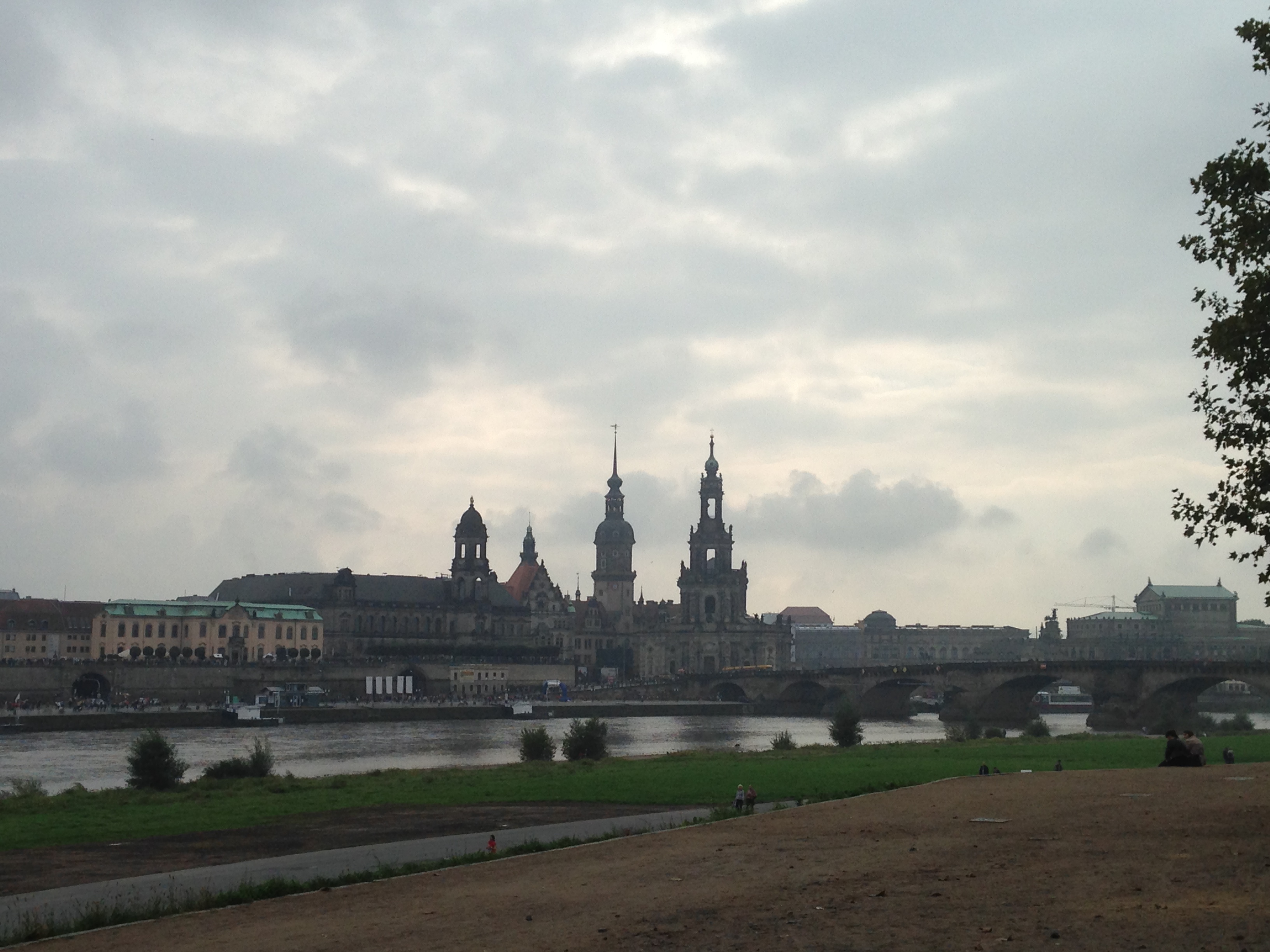
IMG_2276

(Dresden, Deutschland)

Bis nächstes Mal,

Joe
We Haven’t Forgotten

Hijackers rammed jetliners into each of New York’s World Trade Center towers yesterday, toppling both in a hellish storm of ash, glass, smoke and leaping victims, while a third jetliner crashed into the Pentagon in Virginia. There was no official count, but President Bush said thousands had perished, and in the immediate aftermath the calamity was already being ranked the worst and most audacious terror attack in American history.

– New York Times: September 12, 2001

Osama bin Laden, the mastermind of the most devastating attack on American soil in modern times and the most hunted man in the world, was killed in a firefight with United States forces in Pakistan, President Obama announced on Sunday.

– New York Times: May 1, 2011

I am writing about the terrorist attacks of 9/11, because I was going to post my next Czech’n entry, and realized what day it was I was posting, and felt this was more important. I believe it is important to take the time to address the incident properly, for I did not want to write about the terrorist attacks of 9/11 if I was not going to do it justice in my considerations, therefore my Czech’n post will come tomorrow.

I included the above epigraphs because they regard the language surrounding this tragedy, which is the most relevant lens I can think of to consider the incident on this blog.

I was just young enough when the attacks took place (being 7 years old) that I don’t really remember hearing the news or knowing what the news even meant. To me, 9/11 was something that I grew up with. Years ago, someone once said to me that my generation never knew a world without 9/11 and the subsequent consequences. I realized that this is true: I have no memory of airports before the heightened security measures, bin Laden has always been synonymous with terrorist, not ally, but perhaps most of all, in the last 13 years, I have never once – not once – gone on an airplane and at some moment not have the thought cross my mind, that this flight might never land safely. Indeed, for the first couple years after the attacks, I would sit rigidly in my seat, terrified that the captain was plotting to fly us into a building, or maybe into the ocean, not understanding at the time that the captains had nothing to do with the terrorist attacks.

What I have a good deal more memory for, is the confrontation and killing of Osama bin Laden. I remember that morning clearly: I was sitting down to my usual waffles and eggs, and my dad telling me the news. At first I just said ok, and started eating. A few minutes later I processed what he had said, and suddenly disengaged from breakfast. When I got to school, naturally the whole place was buzzing with the news. Our country had spent a decade searching for this monster, and in one night, without even knowing we were close, we were told he was dead. It sparked discussions in every single one of my classes, but most particularly in my American Studies joint English/History class and my Journalism class, which is where I was first introduced to the language regarding the attack in the newspaper lede on Sept. 12, 2001.

Clearly 9/11 is a turning point in American History, and perhaps the most essential event to shape the millennial generation’s lives. But I find the idea that kids being born now will only relate to the event through a history textbook (or e-textbook, as the case very well may be) rather distasteful, to put it extremely mildly. It was an event that twisted and bent and destroyed peoples’ lives, families’ lives, in much the same way that it destroyed those buildings in a plume of ash, fire, glass, and molten steel. Families were torn apart, and the escalation of fear and hatred rose to unprecedented levels (from a single event I should add) and it demonstrated to the US and the world at large the terrible power that terrorism holds and why the luxury of freedom should be guarded with great vigilance.

My heart goes out to friends and strangers who have directly been affected by those events 13 years ago. To those who sacrificed their lives for the price of living in freedom, you have the nation’s grief and to those of you who willingly place themselves into the line of fire to continue defending that freedom, you have the nation’s unending gratitude. Given that my semester abroad is devoted entirely to nation and art, and how the arts have socially changed a country, I think it highly appropriate to close this post with a reflective comic that I remember quite vividly from the very first time that I saw it.

pricklycity 9-11

Until Next Time,

Joe

Czech’n Check-in No. 1

Perhaps one of the things I am most proud of since arriving in the Czech Republic, is the title of my Blog posts, whenever  I czech’n  about being in Prague. Kidding. But it’s a pretty darn good title, you have to admit! It’s hard to believe how much we have already done. It’s not even been a week yet, and already I’m starting to feel more comfortably adjusted to European life.

Granted this is only orientation week, and not even what most of the program will be like, but with half of September gone for our first excursion, half of October gone for our second excursion and all of November gone for finals and our ISPs, it feels like we barely have any time for class left in the semester. It was a bit of a relief and somewhat exciting to learn that Sarah Brock, our Academic Director, intends for our elective course to be the depth and challenge of the program, which means an intense creative writing course will be the biggest challenge academically this semester (except perhaps after classes, working on the month long creative writing piece over November). I say this not because I think it means that I will have an easy academic semester, but because perhaps I’ll be challenged in my creative writing in a way that I am not at Redlands.

I happen to know that Redlands students tend to frequent SIT, and apparently Prague specifically. The last Redlands student to go on the SIT trip to Prague was in the Fall of 2011. I know this because of several factors. According to Sarah, there was another Redlands student a few years ago who also did this program, and his name also happened to be Joe. Ironic isn’t it? I also happen to personally know him. When I visited campus in the Spring of 2012, my mom and I were given a personal tour by an Ad Host named Joe who was a creative writing major. The concluding fact however, was that another Ad Host had told us he just got back from Prague. That’s how I know it was him. Also… given there’s only about 5 Joes that go to Redlands if that, it doesn’t take very long to determine the only other one who’s a creative writing major!

Here are some highlights from Orientation Week: Navigating, Language, meals in Prague, Creative Writing, and Homestay Families. I’ll cover them in that order. Navigating started off with a bang. We all arrived Saturday (or most of us with good flights did anyway) leaving us one day to be totally pampered and guided everywhere. Sunday, we received our first assignment, which was to navigate the metro and/or tram system in groups to a specific destination, with minimal instructions from Sarah. That helped tremendously to plant a seed for confidence of navigating to grow. It also helped cultivate a group dynamic of we’re all in this together: helpless and completely lost. But we found our way, and achieved the goals we were assigned. Now, with a transit map, and map of all the roads in Prague, I feel very comfortable about getting anywhere I need to within the city completely on my own, which is good, because that’ll start on Saturday.

The Language. We started language classes on Tuesday, and have done them every day since (though they’ll only be Tuesdays and Thursdays after this week). The program is structured conversationally and is intended to teach someone the language, but not about the language (as foreign language classes in the US tend to do). On the first day, Tuesday, we were already holding conversations, introducing ourselves, where we’re from and that we were students. It wasn’t easy, and I don’t have everything we did down perfectly, but I was impressed we were able to speak as much as we could in just one day. Also, it’s amazing that when trying to learn your third language, how much your mind reverts not to your first language, but your second. I found myself thinking everything in German and wanting to respond to the professor in German, because I could. I don’t know if there were subtle similarities in the languages that were doing that, or if I was thinking anything but English and so reverted to German instead since I was also comfortable enough with it, but whatever it was, it fascinates me. Talking to others, they had similar experiences with the languages they’ve learned to.

Meals in Prague: what is there to say, but for the most part I love European food. Breakfast has consistently been granola and yogurt, hard boiled eggs, cheese and ham, and sometimes a small pastry/bread. Before arriving, I knew that breakfast was going to consist of at least something of the sort, but every morning, I take the last few bites, and think just how good it actually tastes. (Even though it’s not my waffles and eggs combo that I love so much). Lunches are big, often times being pizza (Italian style, not American) or some sort of hot dish: ratatouille…burrito…spaghetti…French onion soup… etc. Dinners have also been big, and with similar options that we’ve had for lunch, though one night I did have a croissant with ham and cheese; again… being a more European dinner. At our homestays, we’ve been told to expect often times a smaller dinner such as that croissant, or even completely cold cut, not necessarily even meat. Instantly my mind jumped to the six days I spent with a family in Germany eating bread rolls with various spreads for breakfast AND dinner. All I could think was: I’m going to be here for a lot more than six days this time…! But however it ends up, it also means I have more time to adjust to it, get used to it, and even perhaps to expect it (proving problematic with reverse culture shock in December, as is usual apparently with these long term trips).

The second to last highlight was creative writing. We hit the ground running with this workshop. First of all, according to Sarah Brock, Petra Hulova (missing all the accents in the name) is considered one of the absolute best contemporary Czech writers there is, not that Petra would say so of course. So it’s quite an honor that we get to work in such a small group with such a writer. But in class, she asked us a little about ourselves, about our art, why we write, and how we envision ourselves as writers and our writing itself. After this discussion and a review of the syllabus, we then proceeded to receive feedback on our samples we submitted for the program, which was surprising. There was some interesting feedback I received, and I thoroughly enjoyed it. It’s actually given me some things to think about my current work, which is the best, I think, that I could hope for.

The last exciting part of Orientation week that I want to address, is my homestay family. We received our assignments yesterday, and I was super excited to meet my family from the get-go. I have three siblings, two of whom live at home presently, and from what I can gather they are a very athletic family and into economics and law. I had the chance to meet them tonight and I honestly could not be more excited. They are a very outdoorsy family it would seem, have hosted several American students before, and seemed genuinely excited to have me over for the semester. My two older siblings have both been involved in Scouts at some level, and my host brother Albert also plays the piano, and is getting more into music lately. Our dinner tonight has made me realize there’s so much more to look forward to and to learn about my host family and to share stories and experiences, and I could not be more excited or eager to have been assigned this family and to start getting to know them.

At last. 7 days. About 155 hours. That is how long I have been in the Czech Republic/Prague. 7 days. Already, I have accomplished all this (and more – these are just a few highlights). Now, I have to look forward to really starting to learn about the Czech Republic, its history and the arts, as well as going from being a complete foreigner in language to moderately comfortable, to being challenged as a writer, and to learning how to conduct research for an in-depth research project. This week may have been the beginning of my adventure, but my adventure is really just beginning.

 Until Next Time,

Joe

Czech Performance – 1

This is a rather brief entry regarding a performance we saw tonight. The name of the dance performance was the Czech word for “Correction”, which I have conveniently forgotten. It was a bizarre performance lasting about an hour.

Before I go any further, let me apologize about the short comings of language. As I wrote in one of my honors papers spring semester of sophomore year, language cannot recreate any physical experience. This is very much true when I consider how moved I was by the performance, and I understand that nothing I say can recreate the experience. The subtleties of the lighting changes and shifts between music and utter silence are nuances I will not even try to explain.

The performance was an unspoken show of 7 people standing in a line. At first they start of completely frozen, and gradually, as the minutes go by, you begin to see them gain control of their eyes, and then their faces and then their heads, slowly moving towards their arms and the waists. As the show goes on, you realize that their shoes are bolted into the floor. They make their bodies behave fluidly using this fact, so for example, they started by poking each other, which would send them ticking back and forth like a metronome. Then they started figuring out how to dodge one another, so they played with blowing each other around. Then they figured out the amusement of making each other fall to the floor, and watch the person struggle to get up, unable to use their feet or legs to help them. Eventually they begin to fight and they start knocking each other down. Once they were all down and out of breath, one guy stood up and fought and bucked, fighting to get out of his shoes, unable to go anywhere. Finally he exhausted himself, but the others having been inspired, got up and followed suit – all together. When they were all exhausted, they started pretending to march together. Eventually, the person on the left side (audience’s left) found a pair of unbolted shoes, and gradually they made the shoes walk from one end of the line to the other, handing it to each other down the line every few steps, and then made the shoes walk backwards. And it occurred to the middle guy that those shoes looked similar to the ones he was wearing and so started to untie the shoes he was in. The others however, kept distracting him and then others tried to untie their shoes, but they also got distracted by everyone else and soon the group was fighting amongst itself again. Once again they all ended up on the floor, exhausted. Then the lights went out, the dance members unbuttoned their shirts, and rave lights came on and they started dancing. And that was the end.

Other than the fact I felt the end was unfitting and too sudden, I thoroughly enjoyed this piece. I had never really thought about how the motion of our bodies can convey a message, and yet, without having glanced at the program or any other info about the show, I interpreted the dance to be regarding the human nature. It consisted of exploration of our own selves (bodies), discovery, humor and playfulness, competition, aggression, innovation and its subsequent jealousy, camaraderie and the pleasure of letting loose. There were times I was greatly reminded of the minions from the Despicable Me series, and there were times I was struck by how profoundly I was looking human nature in the eye. It was really quite remarkable.

Until Next Time,

Joe

Fire and Spit ~ Part Two

As I have promised, here is the second half of the (Who da wild?) IDYLLWILD! First Year Journey for 2014. The real journey began on Thursday morning. It began with chaos. There were several FYJs all trying to leave at the same time, some people naturally showed up late, others (like me) couldn’t find their wallets/driver licenses, etc. After a sprint back to Brockton and a scarfed down breakfast, we were ready to roll.

Idyllwild starts out with rock climbing, which in this case means starting with Rebecca and David Lyons as our rock climbing guides, so you can’t go wrong there! Seriously though, they were a wonderful presence for our specific group of freshmen, and helped create a really strong start to the trip. It rained a little and hailed rather dramatically, but the afternoon cleared up for us to have a beautiful day of climbing. We stayed up through the afternoon, finally leaving about 4 pm to head down the treacherous topsy-turvy roads over to Idyllwild (about two hours away – yes, we were leaving later than we had intended to).  However, once dinner was ready (after another hour delay because of a stubborn pot that wouldn’t heat up and boil), people were happy with the pasta and meat, cheese and veggie dinner that we had, which was the prelude to another happy evening meeting, the first out camping.

Then we started rolling up our sleeves and sweat. And boy did we sweat! For our second full day camping, we took on Devil’s Slide hike, and crushed it in about an hour and a half. This is a 2.5 mile hike up several thousand feet. But as I keep saying, what the most remarkable thing about it was the group’s self-awareness. This hour and a half wasn’t that of the caterpillar effect. It was a solid group hiking together, the leaders consciously and constantly checking to make sure the group was all together. I have never seen a group do that without one, being asked to do that, and two do that on the first try. Kudos to them. Highlights from the day included the Tahquitz Peak, Sugary Tortillas, and Saturn’s Rings.

The next two days were back country days, and this is where the intensity of the trip came in. The first day, we managed to arrive at our site, Strawberry Junction, no problem. It took us longer than we expected it to, given the pace we had just hiked the day before up Devil’s Slide, but secretly I wasn’t at all surprised that the group subconsciously took a slower pace, even on a more relaxed trail. Lunch today was the classic OP SANDWICHES!!! Always a big hit with people (except maybe those who always want more meat!) I’m surprised we had planned to wait until Friday to have them.

While in the back country, we took advantage of being away from all those other noisy people, and so evening program Saturday night was Celebrity, a humorous game of trying to act out and describe celebrities, with vocabulary increasingly getting restricted. We handed out several pieces of candy to keep people happy, and when finally the game was over and it was cold, people went to bed.

Sunday morning was scheduled to do leadership activities and discussions with Hollis and Chad (our new Assistant Director). We ran through a discussion on several quotes regarding leadership, the team-building activity “the helium pole”, a discussion of the NOLS leadership quadrants and identifying yourself as a leader, and finally a fun relay game where two people can’t walk (one can see but not talk, and one can talk but not see) and one person can walk and talk, but they cannot see. Together, the three people have to accomplish a goal. Naturally this activity leads to a good discussion about leadership and communication and working together as a team.

Then we had lunch and started the hike back to the campsite. This is where things got a little intense. As it was, there were two parallel trails we could have taken: one the curved around to the north, and one that curved around to the south. Supposed to have gone to the north, we ended up going around to the south. So not only did we not get back country water where we were told we could, we ended up being quite a distance from the cars Hollis had shuttled to the campsites for us (where we were supposed to hike right into) the morning before. The worst part of all this was the lack of water, and the inability to get more because we were in the wilderness. We had one participant go into heat exhaustion, and I was very close (getting quite light-headed in the last 20 minutes of the hike or so). All of our lips got chapped due to dehydration, and it took me quite a few days of hydrating and Chap Stick to get that to go away. However, Mikayla and two others went down the trail ahead of the group and managed to flag down a ranger who helped them get to the vans so we could shuttle the group back to the site. All in all, we ended up having dinner about an hour later than we had planned, so the physical consequence was rather insignificant.

What I admired most about this group during all this stress was their ability to keep a good attitude. They had more reason to complain and be unhappy than most of the other FYJs, but they kept telling stories and joking and laughing and singing. I honestly could not be more proud of the way they handled the situation, which leads us to the evening program for Sunday and Closing Ceremony. OP’s Closing Ceremony consists of two evening programs combined into one (Tap and Spotlight). I won’t give away too many details so that it’s still a surprise for those who may go through this in the future, but it’s a great chance to fully appreciate each other, and everything we have brought to the group.

Perhaps my favorite part about extended OP trips however, is the bracelets/anklets. The way OP makes them is out of paracord. We use a different color for each year, so you can identify the specific memories behind the bracelet. You cut the cord to a comfortable diameter, and then using a lighter, you melt the two ends together and use spit to cool off the melted ends, so the bracelet is permanently stuck on your wrist or ankle. Now you have a daily reminder of both the good and the bad that happened on your trip, and not just what it cost to earn those memories, but the effort of perseverance it took to earn them. My freshman year, when I attended the High Sierras FYJ, I remember thinking that if I ever wrote a novel where the characters did this kind of thing, I would call the chapter Fire and Spit. This may not be a chapter of a novel, but it is close enough I think. I call this blog post Fire and Spit because that’s what we trip leaders use to cement the memory of our bonds and friendships.

Until Next Time,

Joe

Fire and Spit ~ Part One

Sometimes I imagine people wonder why I enjoy going camping so much. After all, I give up the comforts of home: no choice in A/C or heat, no dish washer, no soft bed, no computer, no internet, often times no connections to the modern world. Sometimes I wonder why myself. There are times you go hiking, you’re carrying excess weight on your back, you’re sweating, you’re dehydrated and have no water left, and the end is nowhere in sight. There are times you get reduced to tears from stress, and there are other times you feel the acidic stab of being away from home.

To be honest, I don’t go camping because sometimes I go days without cleaning out my Tupperware I eat out of, or that I am often forced to drink water that leaves a sour after taste in my mouth. These things happen nearly every time, but they are not the things that I remember. What I remember are the moments (or even minutes) of laughter that seem like they will never end. I remember the pleasure of hearing others’ life stories and discovering the common connections we have. I remember the evenings of expressing our gratitude of our newfound friendship. In short, I remember the people.  The people are what make it worth it. The wide smiles, the sharp laughs, the witty sense of humor shared.

A couple days ago I came back from leading my first ever First Year Journey (FYJ). The anticipation leading up to the event was tremendous, and had been building up ever since April 2014. And now it’s done, in just a matter of 5 days. In the anticipation however, I found myself reflecting on my experience as an FYJ’er my freshman year, and remembering how absolutely fantastic the experience was, and how badly I wanted to make sure that these new freshmen got the same positive experience that I had received. In reflection, I have realized that if possible, I had an even more positive experience than my freshman year, and that is saying A LOT! It has been my privilege and honor to lead this truly wonderful group of thirteen freshmen, and I sincerely look forward to spending more time with them when I come back to campus in the Spring.

The rest of the discussion however, will be a reflection of what happened over the course of those five days that these people met, and how the group came to develop such a close bond.

Wednesday was the first day we were all together, and from a trip leader’s perspective, there was remarkably little we had to facilitate to bring the group together. Virtually nothing. The morning was filled with the boring logistical details of the trip, followed by two rather amusing games: Ninja and Wha!. It was Wha! that I felt like really broke down the barriers. It was so ridiculous and loud, and helped people realize that it was ok to be ridiculous and loud, that suddenly the group felt much more comfortable together. This made the rest of the day easy: the pack explosion to go over their gear, the group-wide initiatives, and finally the day’s closing evening meeting.

I was particularly happy with the way evening meeting was introduced for this particular group: no introduction, no warning, just the mysterious touching of the pinkies! After accepting the weirdness of this tradition, the group embraced it whole-heartedly for the duration of the trip, and I expect for the duration of their experience with Outdoor Programs the next four years. Evening program that night was Hopes and Fears in a Hat, which the group discussed admirably, and I firmly believed help set the serious undertones of the trip really well.

And that was day one! The next post will cover both the rest of the trip, and why the unusual title, Fire and Spit.

Until Next Time,

Joe